

Introduction
AI in fraud dehttps://zarabank.com/category/industry-news/tection at banks has become one of the most powerful tools in modern financial security. Banks handle millions of transactions every second, and among them, some are illegal or suspicious. Traditional systems cannot always catch these threats in real time, which is why advanced technology is needed. This is where AI in fraud detection at banks plays a major role by analyzing patterns, detecting unusual activities, and stopping fraud before it causes damage.
Today, cybercriminals are using more advanced methods, including fake identities, phishing attacks, and automated bots. As a result, banks must stay one step ahead. AI in fraud detection at banks helps institutions identify risks instantly by learning from data and improving over time. It works faster than humans and can detect hidden patterns that are not visible through manual checks.
In this article, you will learn how AI in fraud detection at banks works, why it is important, its benefits, risks, and expert insights. The goal is to make this complex topic simple and easy to understand for beginners and intermediate readers who want to explore the future of banking security.
What is AI in Fraud Detection at Banks?
AI in fraud detection at banks refers to the use of artificial intelligence technologies to identify, prevent, and respond to fraudulent activities in financial systems. It uses machine learning, data analytics, and predictive modeling to study transaction behavior and detect anything unusual.
Instead of relying only on fixed rules, AI systems continuously learn from new data. For example, if a customer usually spends small amounts locally and suddenly makes a large international transaction, the system can flag it as suspicious. AI in fraud detection at banks makes these decisions in seconds.
The technology also uses behavioral analysis, which means it studies how users normally interact with their accounts. This includes login times, device usage, spending habits, and location patterns. When something does not match the usual behavior, it raises an alert.
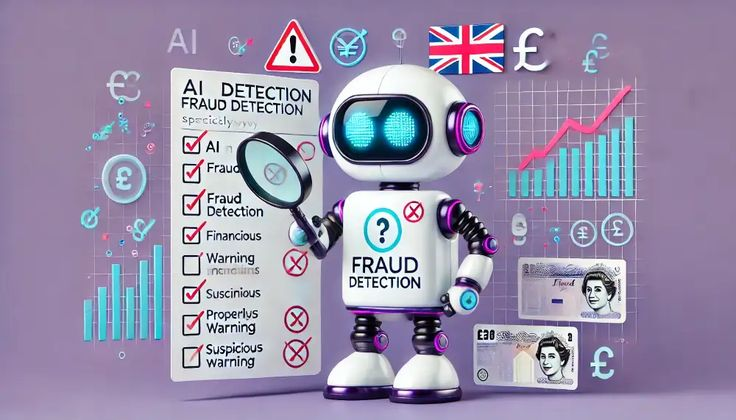
In simple words, AI in fraud detection at banks acts like a smart security guard that never sleeps. It monitors millions of activities in real time and ensures that customers’ money stays safe from cyber threats and financial fraud.
Why is AI in Fraud Detection at Banks Important?
AI in fraud detection at banks is important because financial fraud is increasing at a rapid pace. Cybercriminals are constantly developing new ways to bypass traditional security systems. Without intelligent protection, banks would suffer huge financial losses and customers would lose trust.
One of the biggest reasons this technology matters is speed. Fraud can happen within seconds, and manual detection is too slow. AI in fraud detection at banks works instantly, helping stop fraud before it spreads.
Another reason is accuracy. Human systems can make mistakes or miss hidden patterns, but AI reduces errors by analyzing large datasets efficiently. It improves decision-making and reduces false alarms.
Additionally, financial institutions are handling more digital transactions than ever before. Online banking, mobile payments, and international transfers have increased risks. AI in fraud detection at banks ensures that these digital systems remain safe and reliable.
Without AI, banks would struggle to manage modern security threats. It acts as a foundation for trust between financial institutions and customers in the digital world.
Detailed Step-by-Step Guide
1. Data Collection
AI in fraud detection at banks starts by collecting data from transactions, login activities, devices, and customer behavior. This data becomes the foundation for analysis.
2. Data Analysis
Once data is collected, AI systems analyze it to find patterns. They look for normal behavior and compare it with new actions.
3. Pattern Recognition
Machine learning models identify patterns of fraud by studying past cases. AI in fraud detection at banks uses this knowledge to predict future threats.
4. Real-Time Monitoring
The system continuously monitors transactions in real time. If anything unusual happens, it immediately raises a warning.
5. Risk Scoring
Each transaction is given a risk score based on its behavior. High-risk transactions are flagged for further investigation.
6. Automated Response
If fraud is detected, the system can block transactions, freeze accounts, or alert security teams instantly.
7. Continuous Learning

AI improves over time by learning from new fraud cases. This makes AI in fraud detection at banks smarter and more accurate with every transaction.
Benefits of AI in Fraud Detection at Banks
- Detects fraud in real time without delays
- Reduces human errors in monitoring transactions
- Improves customer trust and security
- Handles large volumes of financial data efficiently
- Identifies complex fraud patterns quickly
- Reduces financial losses for banks and customers
- Works 24/7 without interruption
- Adapts to new fraud techniques automatically
Disadvantages / Risks
- High implementation and maintenance costs
- Requires large amounts of quality data
- Can produce false positives sometimes
- Needs skilled professionals to manage systems
- Privacy concerns regarding customer data
- Risk of over-reliance on automated systems
- Cybercriminals may try to manipulate AI models
- Integration challenges with older banking systems
Common Mistakes to Avoid
Many banks make mistakes when implementing AI in fraud detection at banks. One common mistake is relying only on technology without human supervision. AI is powerful, but human judgment is still necessary.
Another mistake is using poor-quality data. If the data is incomplete or inaccurate, the system may produce wrong results. Banks must ensure clean and reliable data sources.
Some institutions also fail to update their AI systems regularly. Fraud techniques change over time, so outdated models become less effective. Continuous updates are essential.
Lastly, ignoring customer privacy can create trust issues. Banks must balance security with data protection to maintain transparency and confidence.
FAQs
1. How does AI in fraud detection at banks work?
It works by analyzing transaction patterns, customer behavior, and historical data to detect suspicious activities in real time.
2. Is AI better than traditional fraud detection systems?
Yes, AI in fraud detection at banks is faster, more accurate, and capable of identifying complex fraud patterns that traditional systems may miss.
3. Can AI completely stop banking fraud?
No system can guarantee 100% prevention, but AI significantly reduces the chances of fraud by detecting it early and responding quickly.
4. Does AI affect customer privacy?
AI uses customer data for analysis, so banks must follow strict privacy rules to protect sensitive information and maintain trust.
5. What types of fraud can AI detect?
It can detect credit card fraud, identity theft, account hacking, money laundering, and unusual transaction activities.
6. Do banks still need human workers for fraud detection?
Yes, human experts are still needed to review alerts, make final decisions, and manage complex fraud investigations.
Expert Tips & Bonus Points
Experts suggest that banks should combine AI in fraud detection at banks with human intelligence for best results. This hybrid approach improves accuracy and reduces risks.
It is also important to train AI models with diverse datasets so they can recognize different types of fraud patterns. Regular system audits help maintain performance and security.
Another key tip is to focus on customer awareness. Educating users about phishing attacks and safe banking practices can reduce fraud attempts significantly.
Banks should also invest in advanced encryption and cybersecurity tools alongside AI systems for stronger protection.
Conclusion
AI in fraud detection at banks is transforming the financial industry by making transactions safer, faster, and more reliable. As digital banking continues to grow, the importance of intelligent fraud detection systems will only increase.
This technology helps banks identify suspicious behavior in real time, reduce financial losses, and improve customer trust. It also adapts to new fraud methods, making it a long-term solution for modern banking challenges.
However, AI is not perfect. It must be used carefully with proper data, human supervision, and strong privacy protections. When implemented correctly, AI in fraud detection at banks becomes a powerful defense system that protects both financial institutions and customers.
In the future, we can expect even more advanced AI systems that will make banking safer and smarter. Understhttps://en.wikipedia.org/wiki/Understandinganding this technology today helps us prepare for a more secure digital financial world tomorrow.
